
On this page
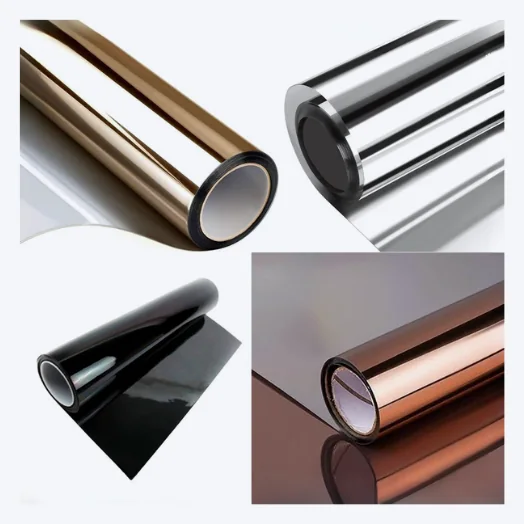
Nawa Lanka Enterprises supplies solar control window film in Sri Lanka for commercial buildings, showrooms and vehicles. We stock ceramic and nano-ceramic films in multiple VLT grades, and our team can help you choose the right specification.
Sri Lanka receives intense sunshine all year. Unprotected glass lets in heat, fades interiors and creates glare. Solar control film cuts heat gain and UV damage while keeping the view.
The three numbers that matter
Every solar film datasheet quotes the same three figures. They tell you how a film will perform.
For example, a film rated VLT 35%, TSER 60% and UVR 99% lets through 35% of daylight, blocks 60% of solar heat and blocks nearly all UV.
Which film technology?
| Type | How it works | What to expect |
|---|---|---|
| Dyed film | Dye layers absorb solar energy | Affordable but fades; usually 2 to 3 years in Sri Lanka. Limited heat rejection, best for short-term use. |
| Metalized film | A metallic coating reflects solar energy | Good heat rejection and durability, a metallic look, but can interfere with mobile and GPS signals. |
| Ceramic film | Ceramic particles block heat without metal | Outstanding heat rejection, natural clarity, no signal interference and 10+ years in tropical climates. Our top recommendation. |
| Nano-ceramic film | Nano-scale ceramic particles | The highest heat rejection available (TSER 65 to 75%). Premium price, ideal for commercial buildings where energy savings justify it. |
For commercial buildings and vehicles in Sri Lanka we recommend ceramic or nano-ceramic film. The better heat rejection lowers air-conditioning costs, the long life avoids replacement, and there is no signal interference.
Choosing film for your building
Offices
The goal is heat rejection to cut air-conditioning costs. Look for VLT of about 40 to 70%, TSER of 55 to 70%, UV rejection of 99% or more, and ceramic or nano-ceramic technology.
Retail showrooms
Balance heat control with a clear view of your merchandise. Look for VLT of about 50 to 80%, TSER of 45 to 60% and UV rejection of 99% or more, which also helps stop displayed goods from fading. Choose low interior reflectivity.
Vehicles
Tint levels on vehicles are regulated in Sri Lanka, with stricter limits on the windscreen and front windows. Ceramic film cuts interior heat in parked cars and keeps phone and GPS signals working. Ask our team about compliant specifications.
Homes
Homes usually need privacy, UV protection for furnishings and heat control. Privacy, one-way mirror and frosted films are popular alongside tinted solar control film.
Ceramic or standard film?
| Factor | Standard dyed or metalized | Ceramic film |
|---|---|---|
| Typical TSER | 35 to 50% | 55 to 75% |
| UV rejection | 80 to 95% | 99% or more |
| Lifespan in Sri Lanka | 2 to 4 years | 8 to 12 years |
| Signal interference | Yes (metalized) | No |
| Fade resistance | Moderate | Excellent |
| Manufacturer warranty | 2 to 5 years | Up to lifetime on some brands |
Installation tips
- Clean the glass thoroughly. Any contamination causes bubbles and poor adhesion.
- Use wet application. A slip solution allows repositioning and proper squeegee technique.
- Allow for curing. Full cure takes 2 to 4 weeks; small bubbles or haze during this time are normal.
- Trim 2 to 3mm from the glass edge so the film does not lift from the edge.
- Check glass compatibility. Some films on tinted or reflective glass can cause thermal stress and cracking.
We also supply squeegees and installation tools. Browse the full catalog, or read our solar control films guide for more detail.
Solar film FAQ
Which solar control film is best for Sri Lanka?
For offices, showrooms and vehicles we recommend ceramic or nano-ceramic film. It rejects more heat, blocks 99% or more of UV, does not interfere with mobile or GPS signals and lasts far longer in tropical sunshine than dyed or metalized film.
Does window film block mobile phone signals?
Metalized films can interfere with mobile and GPS signals. Ceramic and nano-ceramic films contain no metal, so they do not.
How long does solar film take to cure?
Solar film usually takes 2 to 4 weeks to cure fully. Small water bubbles or a slight haze during this time are normal and clear by themselves.
Can solar film be applied to any glass?
Not always. Some films on tinted or reflective glass can create thermal stress and crack the glass, so always check compatibility before installing.
Is vehicle window tinting regulated in Sri Lanka?
Yes. Vehicle tint levels are regulated, with stricter limits on the windscreen and front windows. Our team can advise on compliant film specifications for your vehicle.
Looking for solar control film?
Tell us whether it is for a building or a vehicle and we will recommend the right VLT grade and confirm availability and pricing.